Petrol Pump Automation in India: A Complete Guide for Dealers
Indian petrol pump operations are evolving fast. What worked a decade ago — manual dip readings, paper-based reconciliation, end-of-day reporting — cannot keep up with today's demands. Dealers operating multiple outlets, facing slim margins, and dealing with increasing regulatory requirements need automation to stay competitive.
Here is a practical guide to automating your petrol pump operations.
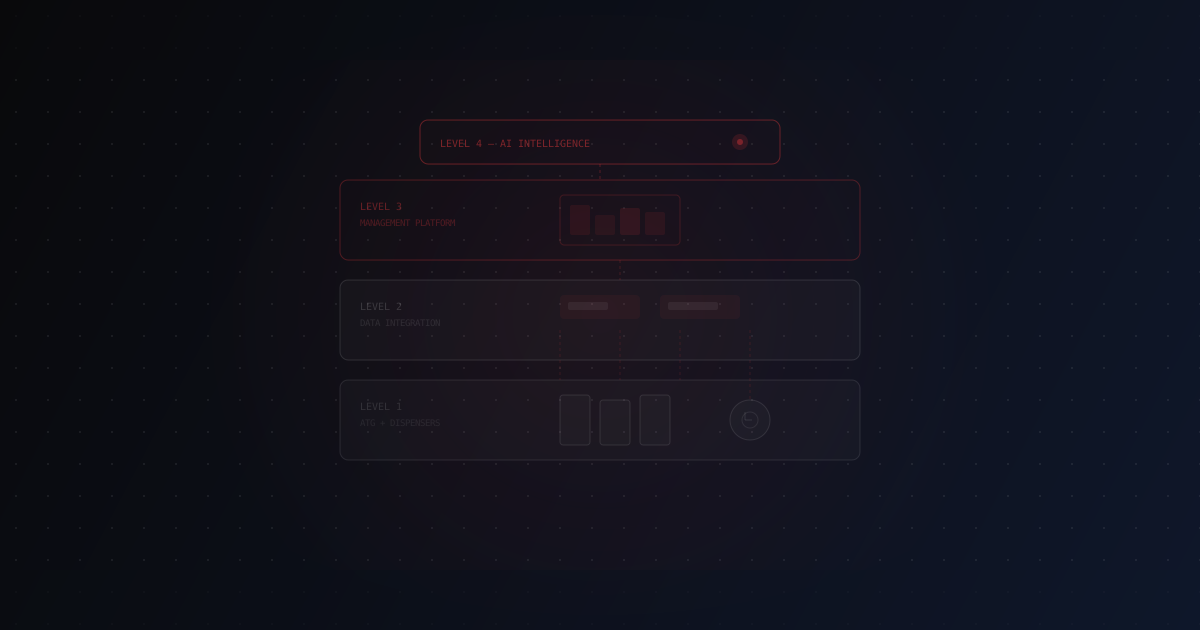
The Automation Stack
Level 1: Automatic Tank Gauging (ATG)
The foundation of any automated petrol pump. ATG systems replace manual dip-stick readings with continuous electronic monitoring of fuel levels, temperature, and water detection in your underground tanks.
Most modern Indian petrol pumps already have ATG probes installed — often as part of OMC requirements. The question is whether you are actually using that data effectively or just meeting a compliance checkbox.
Level 2: Dispenser Integration
Connecting your dispensers to a centralized system captures transaction-level data automatically — every sale, every nozzle, every shift. This eliminates manual register entries and provides an auditable digital trail.
Key integration points:
- Transaction volume and amount per nozzle
- Shift-level totals for attendance reconciliation
- Nozzle-level performance tracking for maintenance
Level 3: Centralized Management Platform
This is where ATG data, dispenser data, delivery records, and financial information come together. A centralized platform like Petro-Astra connects all these data sources and provides:
- Real-time dashboard showing all stations at a glance
- Automated book-to-physical reconciliation
- Delivery verification against tanker documents
- Sales analytics by product, shift, and location
Level 4: AI-Powered Intelligence
The most advanced layer uses AI to move from monitoring to prediction and optimization:
- Demand forecasting for smarter ordering
- Anomaly detection for loss prevention
- Predictive maintenance for equipment
- Margin optimization across products and time periods
Common Automation Challenges in India
Connectivity
Many petrol pumps, especially in semi-urban and rural areas, have unreliable internet. Your automation platform must handle intermittent connectivity — storing data locally and syncing when the connection returns.
Petro-Astra is designed for Indian infrastructure realities, with offline-capable operation and automatic sync.
Staff Adoption
Ground-level staff at Indian petrol pumps may be unfamiliar with digital tools. Successful automation requires:
- Simple, intuitive interfaces — ideally with regional language support
- Training that shows staff how automation makes their job easier, not harder
- Gradual rollout rather than overnight transformation
Hardware Compatibility
Indian petrol pumps use equipment from various manufacturers. Your automation platform should work with existing ATG systems (Veeder-Root, OPW, Franklin) and dispenser brands rather than requiring hardware replacement.
Cost Sensitivity
Dealer margins in India are tight. Automation investments need to show clear ROI:
- Reduced shrinkage (typically 30-50% improvement in the first year)
- Lower labor costs from eliminated manual processes
- Fewer stockouts from better demand forecasting
- Reduced compliance overhead from automated reporting
The Implementation Roadmap
Month 1: Connect ATG systems to a centralized platform. Start capturing real-time tank data across all locations.
Month 2: Integrate dispenser data. Begin automated shift reconciliation.
Month 3: Activate delivery verification and shrinkage tracking. Set alert thresholds.
Month 4-6: Layer in analytics — demand forecasting, anomaly detection, and performance benchmarking across stations.
This phased approach delivers quick wins early while building toward full automation.
The Dealer Advantage
OMC regulations and compliance requirements will only increase. Dealers who automate now will absorb these requirements effortlessly while competitors scramble to adapt.
More importantly, automated dealers make better decisions. When you can see every station, every tank, and every transaction in real time, you stop managing by gut feel and start managing by data.
The margin advantage compounds every month.