The Future of Fuel Station Management Is Intelligent
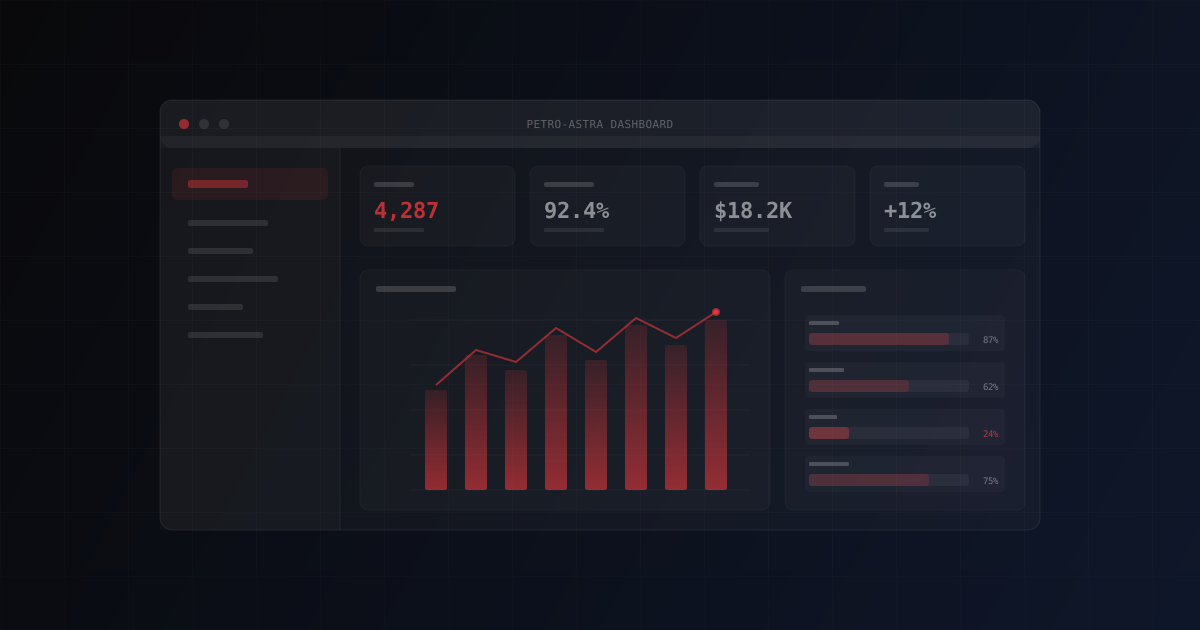
The fuel retail industry is at an inflection point. Margins are thinning, competition from EV infrastructure is mounting, and customer expectations are rising. In this environment, operational efficiency isn't a nice-to-have — it's survival.
The data problem in fuel retail
A typical fuel station generates data from dozens of sources every day: pump transactions, tank levels, shift logs, inventory counts, supplier invoices, and compliance records. Most station owners rely on spreadsheets or legacy software that shows numbers but doesn't interpret them.
The result? Decisions are made on gut feel. Reorder points are guessed. Staffing follows a fixed schedule regardless of demand patterns. And money leaks through inefficiencies that nobody has time to investigate.
What intelligent management looks like
Petro-Astra was built to solve this specific problem. Instead of another dashboard that displays data, it's an AI-powered system that actively helps station operators make better decisions.
Automated inventory intelligence: Rather than checking tank levels manually and estimating when to reorder, the system learns consumption patterns, accounts for seasonal variations, and alerts you before you run low — not after.
Conversational analytics: Ask Astra is a natural language interface that lets station managers query their data without touching a spreadsheet. "What were my top-selling products last Tuesday?" or "Which shift had the highest revenue this month?" — answered in seconds, not hours.
Document processing at scale: Click Astra handles the paperwork side — processing invoices, compliance documents, and supplier contracts with AI-powered document understanding. What used to take hours of manual entry now happens automatically.
The ROI case
Station operators who've adopted intelligent management systems report measurable improvements:
- 15-20% reduction in inventory holding costs through optimized reordering
- 30% less time spent on manual reporting and data entry
- Faster identification of underperforming products and shifts
These aren't theoretical projections. They're the result of replacing reactive management with proactive intelligence.
Looking ahead
The fuel retail industry will continue to evolve. Stations that treat their data as an asset — and use AI to act on it — will be the ones that thrive. Those that don't will find themselves competing on margins alone, which is a race nobody wins.